


- 9 Nov
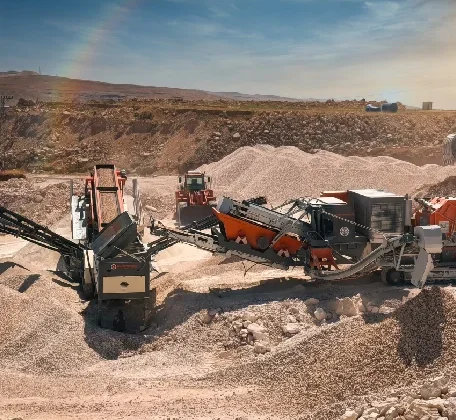
The dust problem in crushing and screening plants is a significant issue, especially for businesses operating in quarrying, aggregate production, mineral processing, and recycling plants. Dust generated during crushing, screening, conveying, and stockpiling processes not only makes the working environment difficult but also directly affects equipment performance, occupational safety, environmental compliance, and production efficiency.
The solution to the dust problem in crushing and screening plants is not limited to a single piece of equipment or method. For effective dust control, the entire production process must be evaluated together, from plant layout to material flow, water spray systems to enclosed conveyors, filter solutions to regular maintenance. In this article, we discuss the fundamental methods that can be applied to reduce dust formation in crushing and screening plants.
Main Causes of Dust Formation in Crushing and Screening Plants
Dust formation in crushing and screening plants is directly related to the structure of the material and the way the production process operates. Fine particles can mix into the air during the crushing of hard rocks, screening of aggregate, transfer between conveyors, and discharging into stockpile areas. Dust dispersion becomes more pronounced, especially in raw materials with a high ratio of dry, brittle, and fine material. Therefore, to reduce the dust problem, the points where dust is concentrated must first be correctly identified.
It can be misleading to think that dust is only formed in the crusher area. The feeding hopper, primary crusher outlet, secondary crusher points, vibrating screens, transfer chutes, and stockpile conveyors are also significant dust sources. Additionally, windy weather conditions, open stockpile areas, and irregular material flow can cause dust to spread over a wider area. Therefore, dust control in plants should be planned as a process covering the entire production line.
The main factors increasing dust formation are:
- Working with dry and fine-grained material
- Having too many open transfer points
- Spillage and scattering on conveyor belts
- Particle dispersion due to intense vibration in screening systems
- Positioning stockpile areas open to the wind
- Crushing and screening equipment that is not regularly maintained
Dust Dispersion at Feeding and Transfer Points
A high amount of dust can form the moment material is poured into the feeding hopper. In discharges made via trucks, loaders, or feeders, as the drop height of the material increases, the rate of dust mixing into the air also rises. Therefore, the drop distance at feeding points should be reduced as much as possible, and the material flow should be controlled.
Transfer points are also critical areas in dust control. Material transferred from one conveyor to another can spread fine particles to the environment, especially if it is moving at high speed. In these areas, enclosed chute designs, correct belt alignment, and local dust suppression applications provide effective results.
Dust Formation in Crusher and Screen Areas
Crushers naturally create a high amount of fine particles while reducing the size of the material. While large pieces are broken in the primary crusher, the amount of dust may increase because finer material is produced in the secondary and tertiary crushing stages. Keeping crusher outlets under control is therefore important.
In vibrating screens, fine particles can mix into the air while the material is being classified. The fact that screen surfaces are exposed makes it easier for the dust generated during screening to spread to the environment. In these areas, covering, water spraying, and appropriate ventilation solutions can be evaluated together.
Dust Control through Regular Maintenance and Operational Discipline
For dust control in crushing and screening plants to be effective, regular maintenance and operational discipline are necessary. Even the best equipment loses its performance when poorly maintained. Clogged nozzles, worn belt edge seals, damaged enclosed chutes, or unmaintained filter systems weaken dust control. Therefore, the maintenance plan should be an integral part of the dust reduction strategy.
Operational discipline is equally important. Sudden changes in material flow, operating belts above capacity, irregular movement in stockpile areas, or neglecting cleaning checks can increase the dust problem. Plant personnel must use dust control systems correctly, recognize signs of malfunction early, and not neglect daily checks. Thus, dust management is supported not only by technical equipment but also by correct operating habits.
The main points to be checked during regular maintenance are:
- Water spray nozzles should be cleaned.
- Conveyor belt edges and sealing points should be checked.
- Filter bags and suction lines should be inspected.
- Whether there is clogging or wear on screen surfaces should be monitored.
- Material accumulation at crusher outlets should be prevented.
- Stockpile areas should be checked regularly.
Daily and Weekly Checks
Daily checks should be performed before production starts. It should be checked whether dust suppression systems are working, whether nozzles are clogged, and whether there are open areas at transfer points. These short checks prevent major problems that may occur during the day.
In weekly checks, a more detailed inspection should be carried out. Filter systems, conveyor covers, screen surroundings, and stockpile areas should be evaluated. When these checks are recorded, the dust management performance of the plant is more easily tracked.
Importance of Personnel Training
Personnel must be conscious for dust control systems to be used correctly. Operators should know at which point dust is formed, in which situation the system should be intervened, and how to protect the equipment. Lack of training can cause even well-designed systems to be used inefficiently.
Personnel training should not only be provided during the initial hiring process. Training should be repeated when new equipment is commissioned, production capacity changes, or maintenance procedures are updated. Conscious personnel contribute directly to both environmental performance and production efficiency.
Cleaner and More Efficient Production in Crushing and Screening Plants
A single method is not enough to reduce the dust problem in crushing and screening plants. To achieve effective results, plant layout, material flow, water spray systems, enclosed transfer points, filter solutions, regular maintenance, and personnel training should be evaluated together. Thanks to this holistic approach, a cleaner, safer, and more efficient production environment can be created within the plant.
Businesses that want to be successful in dust control should focus on these points:
- Correctly analyzing dust sources
- Taking transfer and drop points under control
- Correctly positioning water spray systems
- Utilizing enclosed conveyor and filter solutions
- Implementing maintenance plans regularly
- Raising awareness among personnel regarding dust management
Polygonmach crushing and screening plant solutions combine high production performance with an environmentally friendly and controlled production approach. To reduce the dust problem in your plant, increase production efficiency, and evaluate the most suitable crushing and screening equipment for your project, you can contact Polygonmach.
Categories
- No categories
Archives
Archives
Categories
- No categories