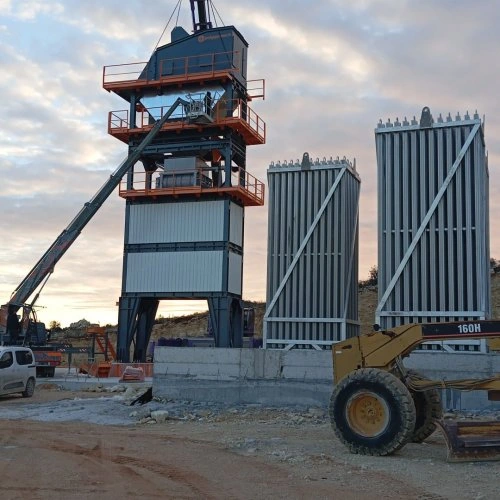

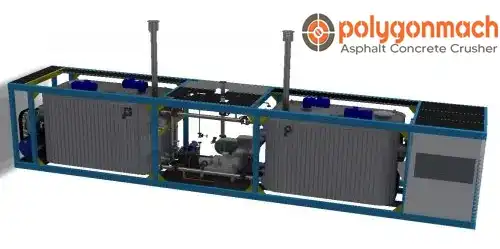
A polymer-modified bitumen plant produces enhanced binder for more durable asphalt. Selected polymers are incorporated into bitumen to improve flexibility, durability and resistance to deformation. Polymer-modified bitumen (PMB) is used in critical infrastructure such as highways and airport runways exposed to heavy traffic, severe weather and demanding environmental conditions.
Accurate process design ensures uniform dispersion of polymer additives and produces a homogeneous, high-performance binder capable of resisting heavy loads and long-term structural wear.
Bitümün polimer katkılarla (SBS, SBR, EVA) mikro düzeyde harmanlanmasıyla ağır trafik yüklerine ve zorlu hava koşullarına dirençli PMB üretimi.
PMB plants serve projects requiring superior asphalt performance, including highways, airports and urban road networks. Bitumen and polymer additives are blended in controlled proportions to produce a stronger, more flexible binder resistant to traffic loads and harsh weather.
Bitumen is first heated to the specified temperature, after which polymers are introduced. Specialized high-shear mixing equipment disperses the polymer uniformly, an essential step for achieving the required pavement properties.
PMB plants include bitumen heating, accurate polymer dosing, intensive mixing and automated control systems. Continuous monitoring preserves the correct bitumen-to-polymer ratio and ensures consistent production quality.
Common polymers include SBS, SBR and EVA, each offering advantages for specific applications. Careful material selection and uniform dispersion create a stable, dependable binder with the performance required in modern construction.
Farklı polimer türlerini istenen oranlarda bitüme enjekte eden otomatik dozajlama ve anlık oran izleme odaklı otomasyon altyapısı.
Protected storage keeps additives dry, while precision dosing units introduce them according to the specified formulation.
Thermal systems maintain the optimum reaction temperature in specialized tanks where bitumen and polymer are combined.
High-shear mills break down polymer particles at micro level and distribute them uniformly through the bitumen matrix.
Automation monitors the bitumen-polymer ratio in real time, enables immediate adjustment and integrates quality control throughout production.
Production begins by heating bitumen to the temperature required for proper polymer incorporation. Precisely dosed additives are introduced and mixed intensively until complete homogenization is achieved.
Energy may be supplied by natural gas, diesel or electricity. Efficient plant operation minimizes energy consumption while maintaining PMB quality and meeting project-specific performance requirements.
Optimized heating, mixing and emission-control systems reduce pollutant output, energy use and operating cost, making long-term PMB production more economical and environmentally responsible.
Electric, steam-coil and alternative heating methods can be selected according to the application. The objective is accurate, efficient and environmentally responsible heating.
Doğal gaz, dizel veya elektrik seçenekleri ile yüksek termal verimlilik sağlayan, emisyon kontrol sistemli çevre dostu işletim.
Heating is integral to PMB production. Direct heating transfers energy efficiently to the bitumen and offers responsive control, while indirect thermal-oil systems provide uniform heat distribution. Selecting the correct method is important because temperature management directly affects finished-product quality and performance.
An efficient, fast-response solution that applies heat directly to the bitumen.
Precision thermal-oil systems provide uniform heat distribution and prevent overheating.
Permanent, high-capacity installations for major infrastructure and refinery projects.
Mobile-chassis systems provide flexible on-site production and easy transfer between jobsites.
Options range from compact units for local work to high-output plants for major infrastructure projects.
Continuous or batch production methods can be configured to match project requirements.
PMB production consists of three main operating stages that ensure stable dispersion of polymer molecules throughout the bitumen matrix:
PMB meeting specified viscosity and strength values is verified through automated monitoring and laboratory tests before transfer to storage tanks.
Specialized mixers and mills disperse polymer particles at micro level to achieve complete homogenization.
Base bitumen is heated to the specified reaction temperature, and SBS, SBR or EVA additives are introduced through a precision dosing system.